really beautiful: 
Namo Amituofo Mantra
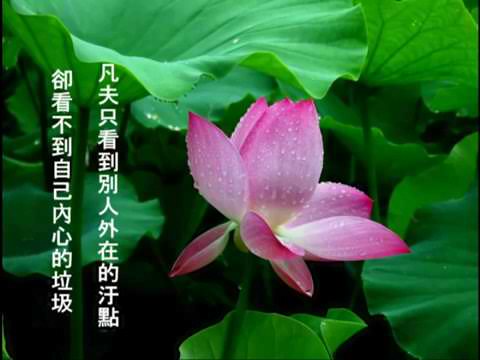
"Namo” - is a transliteration from Sanskrit, an ancient Indian language. It signifies ”to take refuge/homage/adoration.”
“A mi tuo” - is the transliteration of the Sanskrit word “Amida” which means “boundless” (无量, “wuliang”).
“Fo” - is the Chinese word for “Buddha”.
Cantonese Chinese: Namo Amituofo — (or just “Amituofo”)
Japanese: Namu Amida Butus
Vietnamese: Nam Mo A Di Da Phat
English: Amitabha Buddha (or Buddha of Limitless Light)
They all mean: “I pay homage to Amitabha Buddha”.”
Amitabha Buddha” stands for the “Buddha of Infinite Life and Infinite Light.”
The Amitabha Sutra has this to say:
This Buddha’s light is boundless, illuminating the lands of the ten directions without obstruction. This is why he is called Amitabha.
According to Mahayana Buddhist sutras, Amitabha Buddha was, in very ancient times and perhaps in another system of worlds, a king who, having heard the exposition of the Dharma by the then Buddha of that time, Lokesvaraja Buddha, rejoiced in his heart and awakened aspiration for the highest, perfect enlightenment. He renounced his kingdom and throne, and became a monk named Dharmākara, which means ‘Treasury of Dharma’.
He went to see Buddha Lokesvaraja, who revealed to him the radiance of twenty-one billion Buddhas.
He then reflected deeply for five kalpas and decided on the practices to establish his Buddha realm.
After that, he went to the Buddha, and made forty eight great vows for the saving of the sentient beings. The Eighteenth Vow, which is the basis of the Pure Land, ran like this: ‘If upon the attainment of Buddhahood all sentient beings in the ten quarters who aspire in sincerity and faith to be reborn in my land, recite my name up to ten times and fail to be born there, then may I not attain the Perfect Enlightenment…’
He then cultivated and accumulated merits and virtues over inconceivable, countless eons. As the vows and practice were accomplished, the Bodhisattva Dharmakara, attained the most supreme, inimitable and magnificent illumination and became the Buddha Amitabha.
This means that his grand and infinitely compassionate vow is now a reality, the paradise known as Pure Land or Sukhavati has been established, suffering beings must and will be delivered if only they will have the full faith to call upon his name. Such is the inevitability of karmic cause and effect.
Calling the Buddha’s name with full faith is known to the Chinese as ‘NIEN-FWO’ meaning ‘Prayer-recitation’. The Japanese term for this practice is known as ‘Nembutsu’. In this practice three important qualities must be present in the mind: Sincerity, Faith and Aspiration to be reborn in the Pure Land. The simple prayer or formula that one needs to repeat is: “NAMO O-MI-TO FWO”
The words Namo Amituo Fo (Praise to Amida Buddha) are a mantra. Mantras are used widely throughout many schools of Buddhism. It is a mantra that when continually repeated begins to seep into the unconscious mind and takes effect.
Karmic obstructions over countless lifetimes prevent us from realizing our true nature. Once they are removed then we can find it infinitely easier to walk the road towards out true nature. The Great Vow becomes our road to true freedom.
Amitabha’s Name consists of merits and virtues that are immeasurable and boundless, inconceivable, profound, esoteric, splendid, wonderful, and unsurpassed.
The Sutra of Amitabha’s Fundamental Esoteric Powerful Dharani explains the meaning of Amitabha’s name — “A-Mi-Ta” in a verse:
The syllable “A” means all Buddhas in the Ten Directions and Three Times;
The syllable “Mi” means all bodhisattvas;
The syllable “Ta” means all 80,000 sacred teachings.
All [merits and virtues] are sufficiently contained within the three-syllable name.
The sacred word Amituofo contains innumerable sublime teachings, hidden in and springing forth from those words. Reciting the Buddha’s name purifies and stills the three karma’s of body, speech and mind.
Amitabha Buddha’s vast name, endowed with myriad virtues, is like a huge furnace. The many karmic offences that we living beings commit are like snow flakes falling through the air. When ordinary beings laden with karma recite the Buddha’s name, their karma melts away, just like snow flakes entering a furnace. In that way the karma disappears entirely.
The Meditation Sutra teaches:
A single wholehearted recitation of Buddha Amitabha’s name will obliterate all the heavy karma committed in [eight billion eons] of Birth and Death.
The very fact that a person practices Buddha Recitation shows that he already has many good roots, merits and virtues.
If Amitabha’s name can enter through our ears, it plants the seed for our enlightenment and achievement of Buddhahood. Those who “hear of Amitabha Buddha” are therefore known as good men and women.
A magical elixir transforms iron into gold;
Amitabha-recitation turns the ordinary into the sacred"